The Fork in the Road: Slabbing vs. Shaping
Most lapidary hobbyists hit a decision point fairly early: do you invest in cutting equipment, finishing equipment, or try to do both at once on a limited budget? This question comes up constantly among newcomers who've just started collecting rough material and want to process it themselves, but it also surfaces for intermediate rockhounds upgrading from a basic setup. A diamond saw gives you control over raw material. A cabbing machine turns prepped slabs into finished stones. They're sequential steps in the same workflow — but they're not interchangeable, and buying the wrong one first can stall your progress for months.
See current lapidary equipment listings on eBay.
Lapidary Diamond Saws and Blades — Key Characteristics
Diamond saws are purpose-built for cutting rough rock into workable slabs or trimming slabs into preforms. The most common configurations are trim saws (typically 6" or 8" blade diameter), slab saws (10" to 24" blades for larger rough), and small trim saws like the Lortone or Gryphon for detail work. The blade itself is a sintered or electroplated steel core rimmed with industrial diamond grit, and cutting happens with the blade running through a coolant bath — usually a lightweight oil or water-based coolant — that lubricates the cut and clears debris. A quality trim saw setup from brands like Highland Park, Lortone, or Cab King's slab attachment can handle everything from quartz and jasper to harder material like sapphire rough with the right blade selection.
The major advantage here is versatility in raw material handling. You can buy cheap, large rough and reduce it yourself, which dramatically lowers material costs over time. The downside is that saws don't finish stones — you'll still need grinding and polishing equipment to get to a cab. Blade maintenance matters too. A worn or warped blade wanders in the cut, wasting material. Good blades aren't cheap, and a 10" slab saw blade from Crystalite or DiamondCore will run $60–$120. Coolant management, blade tensioning, and keeping the arbor true are ongoing maintenance tasks that require some mechanical comfort.
Lapidary Cabbing Machines — Key Characteristics
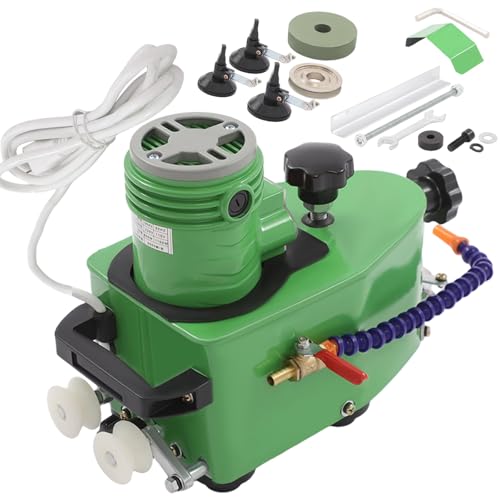
A cabbing machine is a grinding and polishing unit, typically a horizontal or vertical wheel setup with a series of progressively finer abrasive wheels or expandable drums. The workhorse of the category is the flat-lap or the combination unit like the Cab King 6" or 8", which runs multiple wheels — usually starting at 80 or 140 grit diamond, stepping through 260, 600, 1200, 3000, and finishing with a leather or felt polish wheel loaded with cerium oxide or aluminum oxide. You start with a slab or preform that's already been cut to rough shape, grind the dome, shape the girdle, and work through the grits until you've got a polished cab. The process is tactile and fairly learnable, though technique for consistent dome height and symmetry takes practice.
The appeal of a cabbing machine for beginners is the relatively direct path to a finished, usable result. Buy pre-cut slabs from a supplier — there's no shortage of jasper, agate, obsidian, and labradorite slabs available online — and you can be making polished cabs in an afternoon. The limitation is that you're dependent on someone else's cutting decisions and material prep. Machines like the Cabking, Genie (by Diamond Pacific), or Ultra-Tec setups are well-built but represent a meaningful upfront investment, typically $300–$900 for a capable unit. Wheel replacement is ongoing and adds to operating cost, especially if you're working abrasive materials regularly.
Which Should You Choose?
- You collect rough material in the field or buy large rough chunks: A diamond saw setup is the priority. You need to slab before you can cab, and without a saw you're limited to precuts.
- You're new to lapidary and want finished cabs quickly: Start with a cabbing machine and buy commercial slabs. The learning curve on shaping and polishing is satisfying and the feedback loop is fast.
- You're working on a tight budget: A used 6" trim saw can be found for under $150, but a decent cabbing unit costs more. Buy slabs and cab first; add cutting capacity later.
- You work with fragile or high-value material like opal or turquoise: A trim saw with fine control (variable speed or a small blade) is essential for minimizing waste before cabbing.
- You want a complete self-contained workflow: Budget for both. The saw handles rough reduction; the cabbing machine handles finishing. Most serious hobbyists end up with both within a year or two.
Neither tool replaces the other — they're part of the same pipeline. Where you enter that pipeline depends on the material you're working with, your budget, and how much of the process you want to own. Most people find that starting with a cabbing machine and building toward a complete setup is the more satisfying path, since finished stones are the reward that keeps the hobby alive.
Ready to shop? Browse a wide selection of lapidary equipment on eBay: View current listings